
LATE SUMMER: Seasonal Update
Seasonality isn’t a limitation, but the starting point of creativity
Set menu formats give the kitchen more freedom to respond honestly and creatively to seasonal rhythms and embrace change (mostly every 6-8 weeks). No two menus are ever quite exactly the same, even for returning guests.
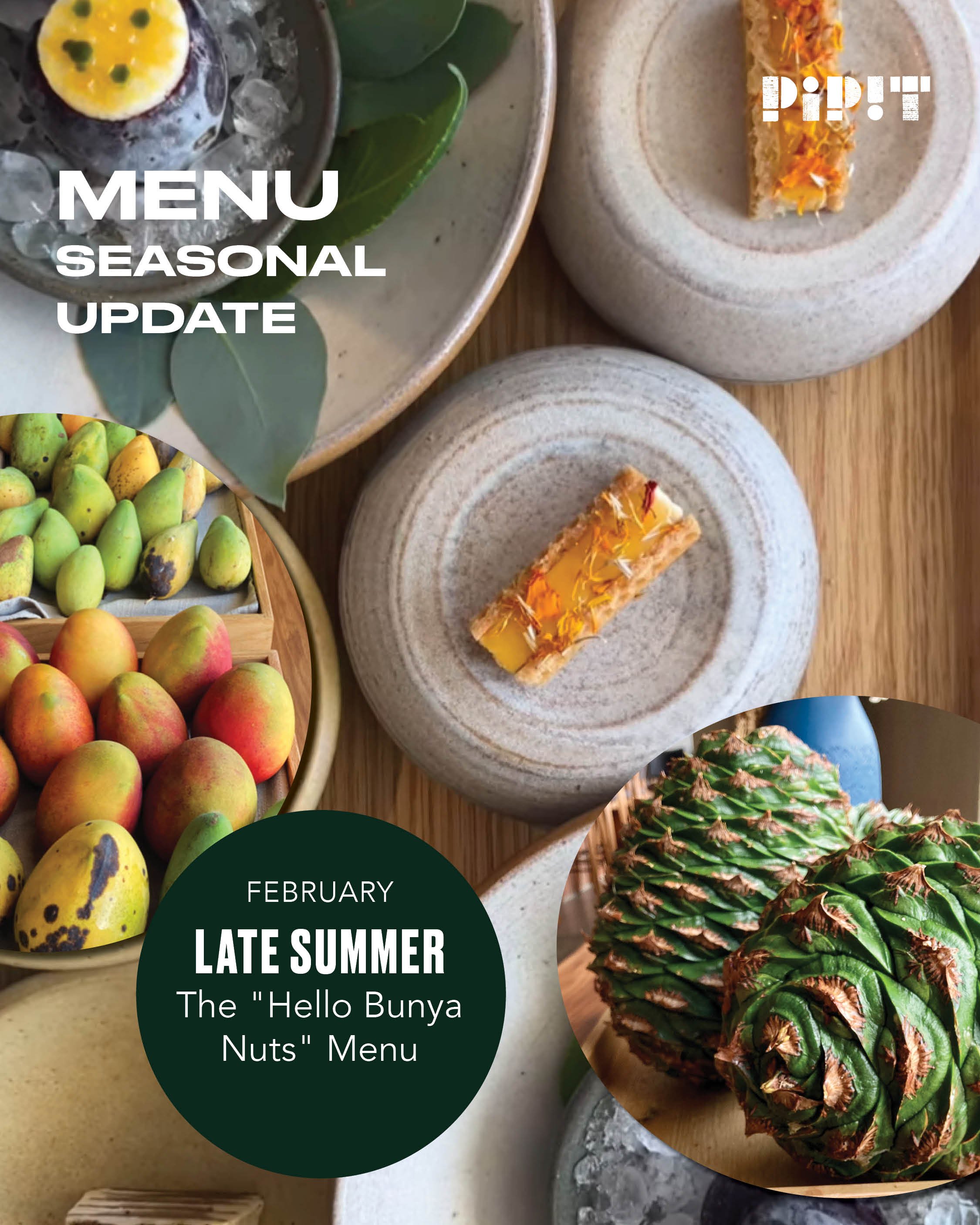
Seasonal menu
We showcases what’s at its peak, what’s best today, not what was printed weeks ago.
MORE ABOUT LATE SUMMER & KEY INGREDIENTS
As Exract from the Pipit Recipe Book (2020), words by Ben Devlin
Late summer is a funny time of year: the mornings are bright and warm, the days are clear and hot (often unbearably so) and, more often than not, the nights feel stormy. It’s like the sun is so intense during the day that all of the moisture on the land has evaporated, but then the clouds can’t deal with this volume and send the water straight back down as aggressively as possible. Storm clouds roll in from over the ocean, rain clouds seem to get caught up along the Great Dividing Range before releasing the bulk of their water on the mountains. This rainfall fills the creeks and rivers, which then combines with the summer king tides, and you start to see why this is also flood season.
These storm swells can help pull the brown kelp loose, so it’s a good time of year to find it washed up. The sparse beach plants also start going to seed, and these seeds can be useful for adding flavour to dishes. Around this time, the short-lived native tamarind appears, and the first of the bunya nuts come crashing down. There is also the last of the riberries and the first of the lilly pillies.
The best local mangoes don’t start ’til mid-January in our area, which is a bit later than most of the stock in the markets, so they are at their peak now. I don’t use mangoes until we can get our local ones, and the difference is huge: they are so sweet and perfumed, the earlier season varieties don’t hold a candle to them. So, I usually look on with envy at the mango dishes being made around this time, but always bide my time until our stock comes in. The rest of the local stone fruit finishes up in early February and there is often plenty of lychee, sapote and dragon fruit around.
2026: The late summer season of Jan/Feb is a hectic time for us. It is the tail end of the holiday period, and things slow down with families back to school and offices. We’ll take advantage of the quiet to take our post-summer annual break around this time (closed 24 Feb to 3 March)